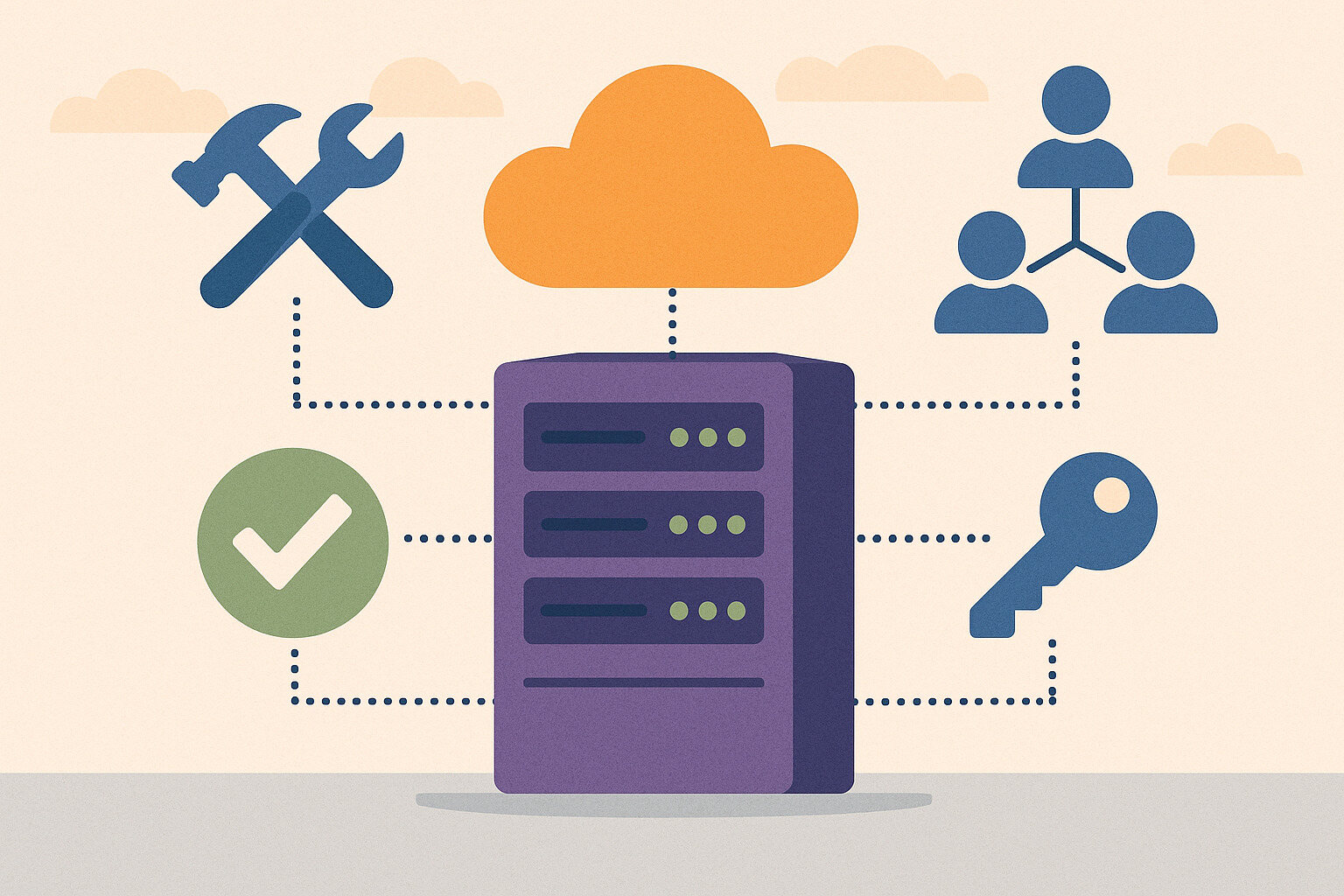
Grid computing does not fail because machines are slow. It fails when timing is careless. Distributed environments live and die by coordination. Thousands of nodes may be ready to work, but if they start at the wrong moment, the entire workflow can collapse into congestion, idle time, or corrupted results. Time-based triggers and delayed execution exist to prevent that outcome. They give structure to work that would otherwise compete blindly for resources.
In many grid environments, engineers rely on simple shared references to align actions across regions and time zones. A visible countdown timer can act as a neutral coordination point before batch windows open or synchronized jobs begin. This kind of timing clarity reduces confusion and creates a shared understanding of when work is expected to start.
Why timing logic matters inside grid workflows
Grid computing is built on diversity. Nodes vary in hardware, network latency, and availability. Some machines sit in university labs. Others live in data centers shared with unrelated workloads. Without timing logic, every job would attempt to run as soon as it is submitted. That behavior quickly overwhelms schedulers and storage systems.
Time-based logic introduces restraint. It tells the grid not just what to do, but when to do it. A workflow may specify that preprocessing starts at a fixed hour, followed by analysis only after results propagate across nodes. This sequencing avoids wasted computation and ensures that each stage receives complete inputs.
Delayed execution also protects human expectations. Researchers may plan to review results in the morning. Operations teams may reserve certain hours for maintenance. Timing logic bridges technical execution and real-world schedules, keeping systems usable rather than hostile.
Triggers that respond to clocks, states, and dependencies
Not all triggers rely on clocks alone. Grid workflows often combine multiple trigger types to capture real operational conditions. A time trigger may release a job at a specific hour, but only if a dependency trigger confirms that the required data has arrived.
For example, a climate modeling workflow might wait until midnight UTC and also require that satellite data replication has been completed. If the data arrives early, the job still waits. If the data arrives late, the job holds until both conditions are satisfied. This dual trigger model reduces error while preserving predictability.
These mechanisms rely heavily on accurate clocks across the grid. Concepts explained in time synchronization basics become operational necessities here. If nodes disagree on time, triggers misfire. One cluster may release jobs prematurely while another still waits. Synchronization keeps triggers honest.
Common use cases for delayed execution
Delayed execution is not an edge feature. It is a core practice in mature grid environments. The more complex the workflow, the more valuable controlled waiting becomes. Running later often produces better outcomes than running immediately.
- Large batch analytics are often scheduled overnight to avoid competing with interactive users during business hours. This protects response times for critical services.
- Data ingestion pipelines frequently delay processing until upstream systems finish uploading files, reducing partial reads and retry storms.
- Machine learning training jobs may wait for resource pricing or availability windows, improving efficiency in shared infrastructures.
- Maintenance workflows rely on delays to ensure systems are quiet before updates begin, lowering the risk of mid-process failures.
In each case, waiting is a form of optimization. The grid stays balanced, and resources are used where they bring the most value.
Scheduling layers that make timing reliable
Triggers and delays do nothing without enforcement. That responsibility belongs to the scheduler. The scheduler interprets timing rules, manages queues, and decides which jobs are allowed to proceed. It acts as the referee between competing demands.
Schedulers translate human intent into machine behavior. A delay of two hours becomes a queued job with a release condition. A time trigger becomes a scheduled event tied to a synchronized clock. Understanding job scheduling mechanics helps explain why timing rules scale well in large grids.
Without schedulers, timing logic would require manual intervention. Administrators would constantly pause and resume jobs. Automation would degrade into supervision. Schedulers make timing predictable and repeatable.
Numerical timing patterns seen in real grids
Operational timing often appears as numbers that look arbitrary until you trace their history. These values usually encode lessons learned from failure.
- A fifteen-minute delay between data arrival and processing allows checksum verification and integrity checks to complete without pressure.
- A two-hour quiet window prevents backup jobs from colliding with analytics workloads that consume heavy I/O.
- A twenty-four-hour cadence ensures that daily reports align across regions despite time zone differences.
These numbers are not decorative. They represent boundaries that protect stability.
Visual summary of trigger types and effects
| Trigger Type | Primary Input | Typical Outcome |
|---|---|---|
| Time based | Clock value | Predictable scheduling |
| Event based | State change | Responsive execution |
| Hybrid | Time and state | Controlled flexibility |
Human factors in timed workflows
Automation often hides the people behind the system. Time-based rules bring human intent back into focus. Engineers express expectations through schedules and delays. They encode when work should happen, not just what should happen.
This clarity reduces friction between teams sharing the same grid. Researchers know when results will arrive. Operations teams know when the load will spike. Silence becomes meaningful instead of worrying. Time awareness tools also help global teams coordinate without constant communication.
Risks of poor timing design
Timing errors rarely announce themselves loudly. A job that runs too early may succeed, but use incomplete data. A job that runs too late may miss its relevance window. These failures can be subtle and expensive.
Common problems include clock drift, overly rigid delays, and hidden dependencies. Each weakens trust in automation. Teams respond by adding manual overrides, which increases complexity. Careful timing, design, and monitoring prevent this spiral.
Where standards and shared definitions help
Large grid collaborations benefit from shared vocabulary around workflows and scheduling. References such as the workflow computing overview provide neutral ground for discussion. They help teams agree on concepts without debating terminology.
Shared definitions do not remove complexity. They reduce misunderstanding. That alone saves time in distributed projects.
Key takeaways at a glance
- Time-based triggers create order across distributed nodes
- Delayed execution protects shared resources
- Accurate clocks keep workflows trustworthy
- Schedulers enforce timing rules consistently
Designing workflows that respect time
Well-designed grid workflows treat time as a resource. They budget it and protect it. Triggers and delays become intentional design choices rather than emergency fixes. Teams that adopt this mindset see smoother execution and fewer surprises.
As grids grow larger and more global, timing discipline becomes more valuable. Precision does not slow systems down. It allows them to move together.